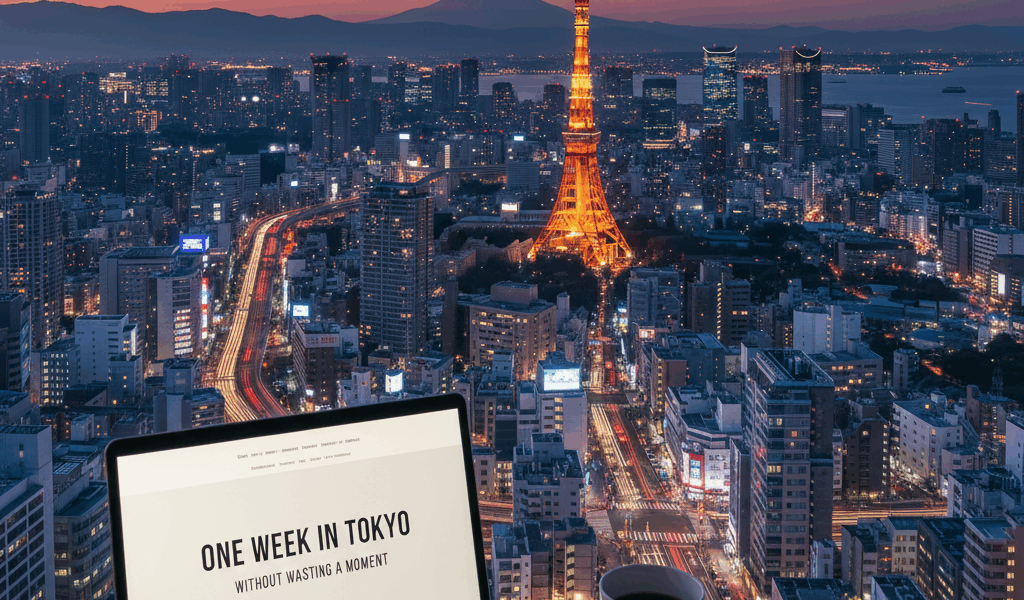
Seven Days in Tokyo: A Realistic Itinerary
As someone who has visited Tokyo multiple times and still feels like I’ve barely scratched the surface, I learned everything about planning a week there through the tension between wanting to see everything and accepting that’s impossible. Seven days in Japan’s capital isn’t enough, but it’s what most visitors have. Here’s how to make it count without exhausting yourself or reducing the city to a checklist.
Day One: Arrival and Orientation
Land at Narita or Haneda. Haneda is closer to the city; Narita is where most international flights arrive. Either way, your first task is getting a Suica or Pasmo card. These rechargeable transit cards work on trains, buses, and vending machines throughout the city. The convenience factor alone is worth it, but they also simplify the math of individual ticket purchases.
Probably should have led with this: skip the JR Pass for Tokyo-only trips. The math only works if you’re taking long-distance shinkansen rides. For a week confined to Tokyo, individual fares cost less than the pass.
Don’t fight jet lag with a packed first day. The temptation to maximize time backfires when you’re exhausted by day three. Settle into your accommodation, walk the immediate neighborhood, eat an early dinner at a local ramen shop or izakaya. Sleep when you’re tired, even if that’s 7pm. Your body will adjust faster than you think.
Day Two: Old Tokyo
Senso-ji temple in Asakusa opens early. Beat the crowds by arriving before 8am. The approach through Nakamise shopping street feels different without tour groups; you can actually browse the stalls selling traditional crafts and snacks.
The temple itself is beautiful but not what makes Asakusa special. The surrounding neighborhood holds the charm: the maze of tiny streets, the glimpses of daily life, the shotengai shopping arcades that serve locals rather than tourists. Wander after the temple. Get lost.
Walk to nearby Ueno Park (about thirty minutes, or one subway stop). The national museums here are genuinely world-class. Pick one based on your interests rather than trying to see everything: the Tokyo National Museum for Japanese art and antiquities, the National Museum of Western Art for European collections, the Science Museum if you’re traveling with kids.
Day Three: Modern Tokyo
Shibuya’s famous crossing is just a starting point. Stand on the platform above and watch the choreography of thousands crossing simultaneously. Take photos. Then leave. That’s what makes Shibuya fascinating: the crossing is the icon, but the surrounding neighborhoods have more interesting character.
Daikanyama, one station away, offers boutique shopping and excellent cafes without the crush. Shimokitazawa has vintage stores, live music venues, and a bohemian vibe. Shibuya planning has gotten complicated with all the development, but the best approach is using the famous crossing as a landmark and exploring outward.
Harajuku’s Takeshita Street is crowded and commercial, but turn down any side street and you find genuinely creative fashion, independent boutiques, and neighborhood life invisible from the main drag. The contrast between tourist corridor and actual neighborhood exists throughout Tokyo.
Day Four: Day Trip
Kamakura or Nikko both work as day trips. Kamakura is closer (about an hour) with temples, a giant bronze Buddha, and coastal atmosphere. The hiking trails connecting temples through bamboo forests feel worlds away from Tokyo. Nikko requires more travel time (two hours) but offers spectacular shrine architecture in mountain scenery, plus natural beauty if you venture beyond the temples.
Choose based on energy level and interests. Kamakura rewards leisurely wandering; Nikko rewards focused shrine visiting. Neither is wrong.
Days Five Through Seven
These days are for deeper exploration based on what you’ve discovered you love. Return to neighborhoods that resonated. Visit specialty museums matching your interests: the Ghibli Museum if you love animation, the Sword Museum if Japanese craft fascinates you, teamLab installations if immersive digital art appeals.
Eat at restaurants you noticed earlier. Follow curiosity into backstreets. Let the schedule breathe. That’s what makes Tokyo endearing to us repeat visitors: the city rewards aimlessness. Some of the best experiences come from wandering without agenda, stumbling into a perfect kissaten (old-style coffee shop) or discovering a shrine tucked between office buildings.
Don’t overschedule. Some of Tokyo’s pleasure is just existing in the city: sitting in a park, observing the train station choreography during rush hour, finding your favorite konbini snacks (the egg salad sandwiches are unreasonably good).
Practical Notes
Cash remains important in Japan despite increasing card acceptance. Konbini ATMs work with foreign cards when bank ATMs often don’t. The 7-Eleven chain is particularly reliable. Withdraw enough to last several days; ATM fees add up.
Restaurant reservations matter for popular spots. Some require booking weeks ahead through Japanese-language systems. Your hotel concierge can often help navigate these bookings, or apps like TableCheck and Omakase handle reservations at participating restaurants.
Seven days passes faster than you expect. Accept that you’ll leave with unfinished lists and reasons to return. That’s not failure; that’s how Tokyo works. The city is too vast and too dense for any single visit to exhaust. Plan to come back.

Leave a Reply