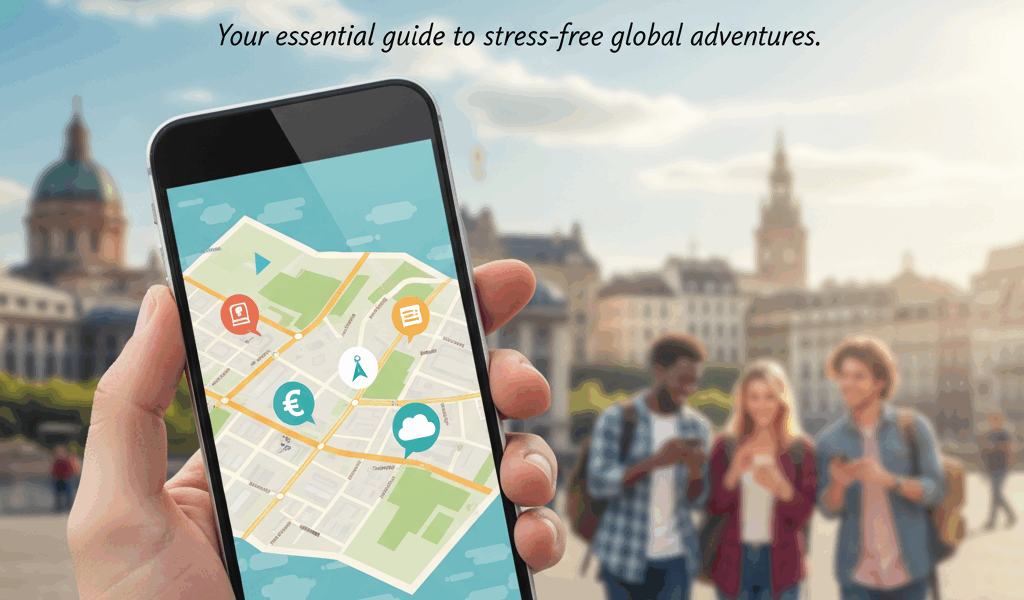
Travel Apps That Actually Work: A Practical Guide
As someone who has tested dozens of travel apps across multiple continents, I learned everything about what works through dead phones, lost connections, and the occasional triumph of technology solving real problems. Your phone handles translations, navigation, boarding passes, and restaurant recommendations now. These capabilities transformed how we travel, but the apps are scattered and inconsistent. The question isn’t whether to use travel apps but which ones actually deliver on their promises.
Translation That Functions
Google Translate’s camera feature reads signs and menus in real-time. Point your phone at Japanese text and see English appear overlaid on the image. It’s not perfect; complex fonts, stylized text, and poor lighting confuse it. But for practical situations like reading menu items, understanding station signs, and deciphering product labels, it works well enough to matter.
Download language packs for offline use before you travel. This preparation takes two minutes and prevents the frustration of needing translation exactly when you have no connectivity. Probably should have led with this: airport WiFi is too slow and unreliable for last-minute downloads.
Conversational translation has improved dramatically. Speaking into your phone and having reasonably accurate translations spoken back enables basic communication anywhere. Don’t expect nuance or idiom handling, but ordering food, asking directions, and explaining basic needs works. The technology bridges gaps that phrase books never could.
Navigation Without Data
Download offline maps before you go. Google Maps, Apple Maps, and specialty apps like Maps.me all allow this. Navigation has gotten complicated with all the options, but the core principle is simple: cell service fails unpredictably abroad, and roaming data costs add up quickly. Having maps stored locally prevents both problems.
Transit directions are particularly valuable. Understanding a foreign subway system with station names in unfamiliar alphabets is genuinely hard. Apps that overlay English, show real-time arrival data, and calculate optimal routes remove significant stress. The Tokyo Metro app works offline and saves hours of confusion; similar apps exist for most major cities.
That’s what makes offline maps endearing to us frequent travelers: they work when everything else fails. The GPS in your phone finds your location without data connectivity. The offline map shows where you are and routes you home. This combination has saved me from serious confusion more times than I can count.
Booking and Payments
Airline and hotel apps replaced paper confirmations. Keep screenshots of confirmations anyway; app failures at airport check-in are not theoretical scenarios. I’ve watched fellow travelers scrambling to log in while the line built behind them. Screenshots work offline and load instantly.
Mobile payment works in many countries now. Apple Pay, Google Wallet, and local equivalents reduce the need to carry cash or worry about card compatibility. Japan’s complicated payment landscape (multiple incompatible systems, cash-heavy culture) is finally yielding to contactless options. Research what’s accepted at your destination before assuming your phone replaces your wallet.
AI Concierge Services
Some apps now offer AI-powered recommendations that learn from your behavior. Rate enough restaurants and the suggestions become genuinely personalized rather than generic “top things to do” lists. Log activities and it stops suggesting places you’ve already visited. The technology works better than it did two years ago and continues improving.
The data collection this requires makes some travelers uncomfortable. The apps need to know where you go, what you like, and how you spend your time to generate useful recommendations. The trade-off between privacy and convenience is personal. Decide what you’re comfortable sharing and choose tools accordingly.
Battery Reality
Travel apps drain batteries fast, especially with GPS and camera active. The navigation that guides you through a foreign city, the translation that reads every menu, the photography that captures your trip: all of it consumes power you need to last all day.
A portable charger isn’t optional anymore; it’s essential travel gear. Plan charging opportunities throughout your day. Know which cafes have outlets. Carry the charger in accessible pockets rather than buried in bags. The best travel apps become useless when your phone dies at 2pm.
Airplane mode when not actively using connectivity extends battery life substantially. The constant searching for cell towers in areas with weak signal drains batteries faster than normal use. Toggle connectivity based on actual need rather than leaving everything on all day.
Travel apps solve real problems when they work and create frustration when they don’t. Test critical apps before depending on them. Download offline content before departure. Keep backup screenshots of essential documents. The technology is good enough to transform travel, but not so reliable that preparation becomes unnecessary.




Leave a Reply