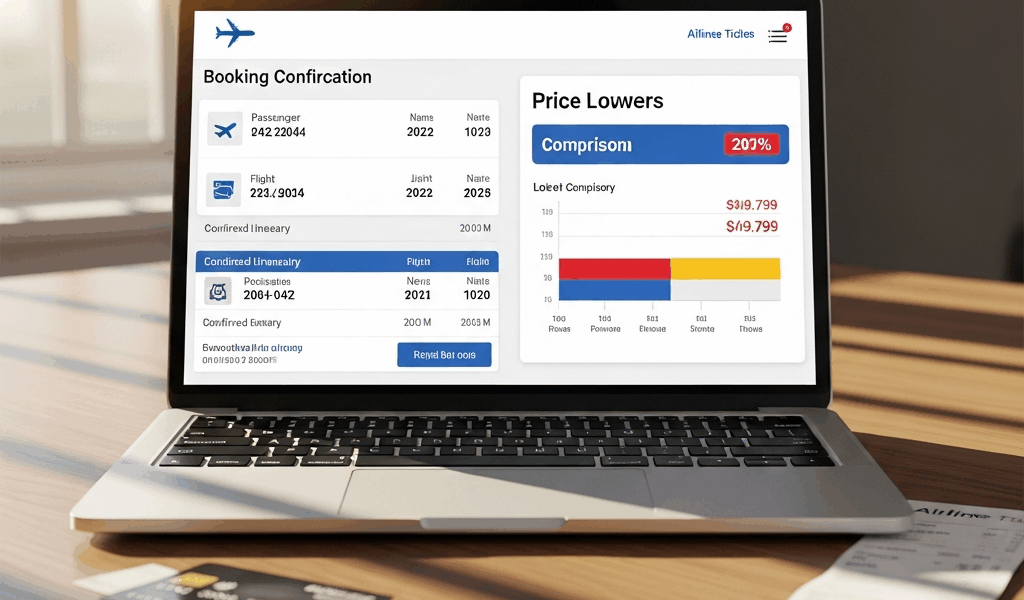
Flight Prices Drop After You Book — Here’s What’s Actually Going On
Airline pricing has basically become its own discipline with all the dynamic fare noise flying around. I paid $340 for a round trip to Denver last spring — checked my email three days later out of pure habit — and saw the exact same flight sitting at $268. Same seats. Same layover in Chicago. Just $72 cheaper than what I paid 72 hours earlier. That specific gut-punch is probably what brought you here.
So here’s the thing. Airlines run on real-time pricing engines that adjust fares based on seat inventory, competitor moves, demand spikes, and fuel cost shifts — sometimes hourly. When you hit “confirm,” you locked in the market rate at that exact moment. Not yesterday’s rate. Not tomorrow’s. Yours. The airline owes you nothing if the number drops by Friday. That said, this situation is almost always recoverable, and how you recover it depends entirely on the fare class you purchased.
Price drops aren’t glitches. They’re deliberate. A carrier might slash fares on a thin route to fill seats that would otherwise fly empty at zero revenue. Or a competitor cuts prices on a parallel flight, and everyone else scrambles to react within the hour. The market moves fast — your confirmed fare just means you were there at 2 p.m. on a Tuesday instead of 6 p.m.
Check Your Ticket Type Before You Do Anything Else
This is the actual decision point. Everything downstream depends on your fare class.
Pull up your booking confirmation email right now. Scan the fine print for “Refundable,” “Non-refundable,” or “Basic Economy.” If you booked directly through the airline’s site, log in, find your reservation, and click the details tab. Fare rules live there — sometimes in plain English, sometimes in legal language that takes three reads and a coffee to decode.
Pausing for the bit that actually matters. Here’s how each tier plays out:
Refundable fares give you actual cash back. Cancel the booking, get the money returned to your original payment method, and rebook at the lower rate. Clean, simple, done.
Non-refundable fares won’t return cash — but they typically let you change the flight and pocket the difference as a travel credit. Original ticket at $340, new price at $268? You’d pay nothing to rebook and receive a $72 credit toward a future flight with that airline.
Basic Economy is where things get painful. Most Basic Economy tickets block changes entirely unless you pay a change fee — usually somewhere between $75 and $125 on major carriers — plus any fare difference. The math rarely works out. Flight dropped $70 but your change fee is $75? You’re already losing money before you’ve touched the keyboard. Don’t make my mistake of assuming Basic Economy has any flexibility built in. It doesn’t.
Find your confirmation. Thirty seconds of clicking beats thirty minutes of quiet regret.
How to Actually Request a Price Match or Flight Credit
Not every airline plays ball on price drops — but the major US carriers do offer change options worth using. Here’s how each one works in practice.
Southwest
Southwest is genuinely the most generous carrier here. Free changes on any ticket, no fees, no arguments. Go to southwest.com, hit “Manage Reservations,” enter your confirmation number and last name, then select “Change Flight.” The new fare shows up. Book it. If the updated flight costs less than what you paid, you get a travel credit for the difference — immediately, right there on screen. If it costs more, you cover the gap. The whole process takes maybe ten minutes. Southwest won’t make you call anyone.
Delta, American, United
These three generally require a phone call or live chat for price-drop scenarios. Here’s the actual sequence:
- Go to the airline’s website and open “Manage My Booking” or “My Reservations.”
- Pull up your confirmation. Write down your current fare and the new lower fare you found — you’ll reference both numbers in the conversation.
- Call the airline directly. Delta is 1-800-221-1212. American is 1-800-433-7300. United is 1-800-864-8331.
- Say: “I’d like to change my flight — the same route is now showing at a lower price and I want to rebook at that rate.” State it as your intention, not as a question about whether they “match” prices.
- They’ll pull up your ticket, verify the current fare, and process the change. Non-refundable tickets typically yield a travel credit for the difference. Refundable tickets sometimes get you cash back, though that varies by agent and circumstance.
Live chat works on all three websites and usually has shorter wait times than the phone queue. Identical process — just typed instead of spoken.
One rule worth knowing: the DOT 24-hour cancellation window lets you cancel any direct airline booking within 24 hours for a full refund, no questions asked. After that window closes, the 24-hour rule is gone — but the airline’s standard change policies still apply.
When Canceling and Rebooking Is the Better Move
Refundable tickets hand you a genuine choice here. Run the numbers before you decide anything.
Say your original ticket was $340, fully refundable. New price is $268. Cancel, receive $340 back to your card, spend $268 on the replacement booking, keep $72. That math always wins — no ambiguity.
Non-refundable situations are tighter. A change fee of $75 to $125 stacked against a $50 price drop means you lose money by changing. Keep the original booking. The break-even point matters more than the gross savings number.
One thing most people miss: several premium travel cards cover airline change fees outright. I’m apparently a Chase Sapphire Reserve person and it’s covered change fees for me twice now while the basic cards I used before never caught a dime. The American Express Platinum has a similar benefit. Check your card’s travel protections before assuming the change fee comes out of your pocket — sometimes it doesn’t.
One actual warning on rebooking: your seat selection resets. You’ll be assigned a new seat automatically, potentially in a worse row or a different section of the cabin. Pull up the seat map before you confirm the change. It takes 90 seconds and has saved me from a middle seat in row 34 at least once.
Tools That Catch Price Drops So You Don’t Have To Watch Manually
While you won’t need a full travel agent setup, you will need a handful of tracking tools — at least if you want to stop discovering price drops three days too late.
Hopper might be the best option for aggressive monitoring, as flight tracking requires constant data pulls. That is because Hopper refreshes fare data continuously and pushes notifications the moment prices shift on a saved route. It’s built for travelers with flexible dates who want the lowest possible entry point.
Google Flights lets you toggle “Track prices” on any search result. Google sends email alerts when the fare moves in either direction — no account required beyond a standard Gmail login. Free, reliable, and already integrated into tools most people use daily.
Kayak Price Alerts work similarly — save a search, set your parameters, and Kayak monitors the route and emails you when the number shifts by a meaningful amount. Multiple notifications per week if fares are moving around.
Here’s the honest reframe: catching a price drop after booking stings. But it’s also just information. Every flight you book going forward should have at least one price alert running behind it. Set it once, check it a few times a week until departure. You might recover more than you expect — and at minimum, you’ll stop being the last person to find out the fare moved.



Leave a Reply